Nothing motivates a parent more than their child's future. Whether it is an engineering degree from IIT, an MBA from a top B-school, or professional education abroad, the cost of quality education in India and globally continues to rise every year. This is why a child education fund is no longer optional for most families - it is a necessary part of long-term financial planning.
The good news is that with the right investment strategy started early, funding your child's education is completely achievable. A SIP for child education can help parents build a disciplined, goal-based corpus over time while taking advantage of compounding and market growth. In many cases, child future planning with SIP is one of the most practical ways to prepare for major education expenses without stress.
The Rising Cost of Education
Education inflation is often higher than regular inflation, especially for premium courses and private institutions. That means waiting too long can significantly increase the amount you need to save. A well-structured education planning mutual fund strategy helps parents stay ahead of these rising costs.
Cost of education in 2026 and beyond
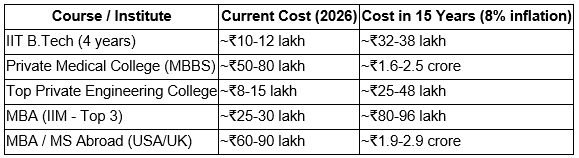
These numbers may look intimidating, but systematic investing can make them achievable. A strong child education fund started early gives you time, flexibility, and the power of compounding.
How SIP Can Fund Your Child's Education
The biggest advantage of a SIP for child education is time. If you begin when your child is born, you may have 15 to 18 years to build the corpus. That long horizon allows even modest monthly investments to grow into a meaningful education fund.
SIP growth illustration
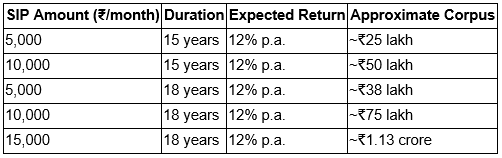
A step-up SIP, where you increase your contribution by 10% every year in line with your salary growth, can make a major difference. This is one of the smartest approaches in child future planning with SIP because it keeps pace with your income and improves the final corpus.
Why SIP for Child Education Works Well
A SIP for child education is effective because it matches the natural timeline of a child's growing needs. Education goals are usually long-term, so there is enough time to take advantage of equity-linked growth before gradually shifting to safer assets near the goal date.
Advantages of using SIP
- Discipline
SIP creates a regular investment habit that works quietly in the background.
- Compounding
The longer the money stays invested, the more it can grow through compounding.
- Flexibility
You can increase, pause, or adjust the SIP based on your income and goal progress.
- Goal-based investing
A dedicated child education fund keeps your savings focused on one specific objective.
- Inflation protection
An equity-oriented education planning mutual fund can help fight rising education costs better than low-return savings products.
Which Funds to Choose for a Child Education Goal?
The right fund depends on how many years are left before the education expense begins. A child education fund should always be chosen based on time horizon, risk tolerance, and your overall financial plan.
For Horizon of 10+ Years
If your goal is 10 years or more away, equity mutual funds are usually suitable. Long horizons give your portfolio time to absorb volatility and benefit from long-term growth.
Suitable options
- Diversified equity funds.
- Flexi cap or multi cap funds for broader exposure.
- Mid and small cap funds for higher long-term growth potential.
- Index funds such as Nifty 50 or Nifty Next 50 for low-cost passive investing.
For a long-term education planning mutual fund, equity funds can be an effective foundation when started early.
For Horizon of 5-10 Years
As the goal gets closer, a balanced approach often makes more sense. You still want growth, but you also need to reduce risk gradually.
Suitable options
- Aggressive hybrid funds.
- Balanced advantage funds.
These options can help parents continue child future planning with SIP while adding a stability layer through debt allocation.
For Horizon Under 5 Years
When the education goal is very close, protecting capital becomes more important than chasing high returns.
Suitable options
- Short duration debt funds.
- Conservative hybrid funds.
At this stage, the focus of the child education fund should shift from growth to capital preservation.
Practical Child Education Planning Framework
A strong plan is not just about investing; it is about planning correctly and reviewing regularly.
A simple framework to follow
- Calculate the target corpus
Estimate the future education cost and define the amount you need.
- Start early
Every year of delay increases the required SIP amount.
- Choose the right asset mix
Match the investment choice to the number of years left.
- Keep the goal separate
Use a dedicated child education fund or separate portfolio to avoid mixing it with general savings.
- Review annually
Check progress once a year and increase the SIP if your income grows.
- Shift to debt near the goal
Move part of the portfolio to safer assets 2-3 years before the expense begins.
This approach makes child future planning with SIP more effective and easier to manage over the long run.
Child Plans vs Mutual Funds
Many insurance companies sell "child plans" that combine insurance and investment. These products may look attractive at first, but they usually come with higher charges and lower returns.
Why a SIP-based approach is often better
- A term plan provides insurance protection separately.
- A dedicated SIP for child education offers better flexibility.
- An education planning mutual fund can generate higher long-term returns.
- You keep control over your investments instead of locking them into bundled products.
In most cases, a pure term plan for the parent plus a separate child education fund is a cleaner, lower-cost, and more efficient solution.
Final Thoughts
A child's education is one of the most important financial goals for any parent. Rising tuition costs make early planning essential, and a well-structured child education fund can make that goal much more achievable. Starting a SIP for child education early gives you time, discipline, and the benefit of compounding.
Whether you are planning for school, college, or higher studies abroad, child future planning with SIP helps you prepare in a systematic way. By choosing the right education planning mutual fund and reviewing your progress annually, you can stay on track and protect your family from future financial pressure.
Plan your child's education systematically. Start early, stay consistent, and let time work in your favor.
FAQ's
Q. What is a child education fund?
A. A child education fund is an investment plan created to build a corpus for future education expenses such as school, college, or higher studies.
Q. Why should I start a SIP for child education?
A. A SIP for child education helps you invest regularly, benefit from compounding, and build a goal-based corpus over the long term.
Q. How much should I invest for my child's education?
A. The amount depends on the target course, future cost, time horizon, and expected return. Starting early can reduce the monthly SIP needed.
Q. Which fund is best for a child education goal?
A. The best fund depends on the number of years left before the expense begins. Equity funds work well for long horizons, while hybrid or debt-oriented funds may suit shorter timelines.
Q. Can SIP help beat education inflation?
A. Yes, a SIP in an equity-oriented investment can help fight education inflation by aiming for higher long-term growth than traditional savings products.
When should I start planning for child education?
A. It is best to start as early as possible, ideally when the child is young, because a longer time horizon allows your investments to grow more efficiently.
Q. Should I use equity or debt funds for child education?
A. Equity funds are usually better for long-term goals, while debt or conservative hybrid funds are more suitable as the goal gets closer.
Q. Is a SIP-based education plan better than a child insurance plan?
A. A SIP-based education plan is often more flexible and potentially more efficient than bundled child insurance products. A separate term plan plus a dedicated SIP is usually a cleaner approach.

 Login
Login






 Register on SCORES Portal LEDO